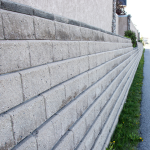




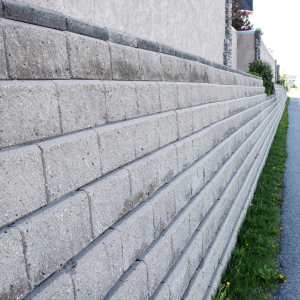
 A retaining wall can look remarkably simple once it is finished. To most people, it is a clean line of concrete, masonry, or stone holding back soil and helping one elevation transition into another.
From an engineering perspective, however, that wall is constantly doing work. Soil is pushing against it, water may be building pressure behind it, gravity is trying to move everything downhill, and the conditions beneath the wall are influencing how well the entire system performs.
At McNeil Engineering, retaining walls are a great example of why seemingly straightforward site features often require careful coordination between civil engineering, structural engineering, drainage design, surveying, and landscape architecture.
The Wall Is Only Part of the System
A retaining wall is not simply a vertical barrier holding dirt in place. It is part of a larger system involving soil, foundations, drainage, grading, nearby structures, and sometimes roads or parking areas.
Engineers need to understand what the wall is supporting and what exists around it. A wall beside a landscaped area faces different demands than one supporting a roadway, parking lot, building, or heavily traveled pedestrian space.
Height matters, but so does everything happening above and behind the wall. Additional loads from vehicles, structures, stored materials, or future development can influence how the wall needs to be designed.
Soil Never Stops Pushing
Soil may look stationary, but it creates continuous pressure against a retaining structure. The amount of pressure depends on factors including wall height, soil characteristics, groundwater, slope, and what is happening on the surface above.
Structural engineers evaluate those forces to determine whether a wall can resist sliding, overturning, and other potential movements. The foundation also needs enough support to transfer those forces safely into the ground.
This is why two walls that look almost identical from the outside may require very different structural solutions. What matters is not simply the appearance of the wall, but the forces acting on it.
Water Can Change Everything
Water is one of the most important considerations in retaining wall performance.
When water collects behind a wall, it can create hydrostatic pressure in addition to the pressure already being created by the soil. If that water has no effective path to escape, the forces on the wall can increase significantly.
Drainage features such as free-draining backfill, drainage pipes, outlets, and carefully planned grading can help manage that water. The exact solution depends on the site, but the goal is generally the same: give water somewhere appropriate to go instead of allowing it to build pressure behind the structure.
A retaining wall and a drainage system should therefore never be treated as completely separate features. Their performance is closely connected.
Topography Often Creates the Need
Many retaining walls begin with one basic challenge: the site is not flat.
Rather than moving enormous amounts of earth or creating long slopes, a retaining wall can allow two different elevations to exist relatively close together. This can create additional usable space for buildings, parking, roadways, sidewalks, landscaping, or outdoor amenities.
Surveying becomes especially important in these situations because accurate elevation information helps engineers understand the existing terrain. Even relatively small differences in grade can influence wall height, drainage, earthwork quantities, and how the surrounding site needs to be configured.
A strong design starts with knowing precisely what the land is doing before trying to reshape it.
Retaining Walls Can Unlock Difficult Sites
On constrained properties, retaining walls can become a valuable site-planning tool. They may allow a development to use land that would otherwise be lost to steep slopes or difficult elevation transitions.
That does not mean walls should be added simply to maximize every square foot. They need to make sense technically, financially, visually, and in terms of long-term maintenance.
The most effective site designs often evaluate several options. Sometimes adjusting a building elevation or changing a parking layout may reduce the need for a large wall, while in other cases a properly designed retaining system may provide the cleanest and most efficient solution.
Civil and Structural Engineering Have to Meet
Retaining walls sit directly at the intersection of civil and structural engineering.
Civil engineers are considering grading, drainage, utilities, roadways, sidewalks, and how the wall fits into the broader site. Structural engineers are evaluating the forces on the wall, its foundation, reinforcement, materials, and connections.
Those two perspectives need to stay coordinated. A change in finished grade can affect structural loading, while a change in wall geometry can influence site drainage or available space.
Early coordination can prevent the wall from becoming an isolated element that creates problems elsewhere on the project.
Landscape Architecture Can Transform the Experience
A large retaining wall can become visually dominant if it is treated only as an engineering requirement. Landscape architecture provides an opportunity to make that necessary infrastructure feel more integrated with the surrounding environment.
Planting, terracing, material selection, pedestrian routes, and site features can soften the visual impact of a wall while creating more interesting outdoor spaces. In some settings, multiple smaller terraces may create a very different experience than one tall uninterrupted structure.
Plant selection also requires coordination. Roots, irrigation, drainage, soil depth, and long-term maintenance all need to work with the engineering system rather than against it.
The result can be infrastructure that solves a technical problem while also contributing to the character of the property.
What Is Above the Wall Matters
One detail that can easily be overlooked is how the space above a retaining wall will eventually be used.
A landscaped strip may create relatively modest loading, while a roadway, parking area, building, or heavy equipment can introduce additional forces. Even if that future use is not part of the immediate project, planning for it can influence decisions made today.
This becomes particularly important on properties expected to expand in phases. A retaining wall designed around current conditions may become more difficult to modify later if future development was never considered.
Thinking ahead gives property owners more flexibility and can help avoid expensive reconstruction.
Maintenance Should Be Part of the Conversation
Like most infrastructure, retaining walls benefit from periodic observation and maintenance. Drainage outlets can become obstructed, surrounding grades can change, landscaping can mature, and cracks or movement may appear over time.
Accessible drainage features and thoughtful site planning make inspection and maintenance easier. Owners should also understand that changes near the wall, such as adding heavy loads or altering drainage patterns, can affect how the system performs.
Long-term durability depends partly on design and partly on what happens around the wall after construction is complete.
Infrastructure Hiding in Plain Sight
Retaining walls are easy to overlook because they often become part of the background. Once landscaping matures and the surrounding property is complete, people may walk or drive past them every day without thinking about the engineering involved.
That may actually be a sign that the system is doing its job.
At McNeil Engineering, we see retaining walls as more than barriers between two elevations. They are engineered systems where structure, soil, water, topography, infrastructure, and design all come together.
The finished wall may look simple. Creating one that performs safely, efficiently, and reliably over time is anything but.