



 Engineering innovation does not always arrive with a dramatic breakthrough. More often, technology, materials, and design strategies improve gradually until something that once felt experimental becomes a practical part of everyday project delivery.
That transition is happening across the built environment in 2026. Civil engineers are finding new uses for artificial intelligence and digital modeling, structural engineers are working with evolving material standards, and landscape architects are placing even greater emphasis on heat, flooding, biodiversity, and carbon.
At McNeil Engineering, staying aware of where these professions are heading matters because today’s emerging ideas can influence tomorrow’s project expectations.
Civil Engineering Is Becoming More Data-Driven
Artificial intelligence is quickly moving beyond administrative tasks and into technical civil engineering workflows. ASCE recently highlighted firms that use AI to analyze large land parcels, accelerate deed research, interpret survey data, and assist with site planning for complex projects.
That does not mean an algorithm suddenly replaces the judgment of a civil engineer or surveyor. Instead, AI can help professionals process enormous amounts of information more quickly, giving experienced teams more time to evaluate alternatives, identify constraints, and determine which solution actually makes sense for a site.
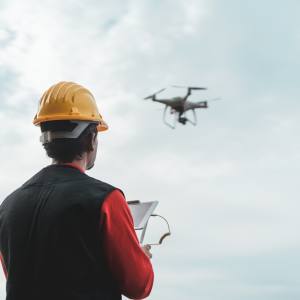
The potential becomes even more interesting when AI is combined with drone imagery and three-dimensional models. In August, ASCE reported on efforts to combine crowdsourced high-resolution drone imagery with advanced 3D modeling to create detailed representations that could support infrastructure inspection, construction tracking, asset management, and other engineering applications.
Digital Twins Are Growing Up
Digital twins have been discussed in engineering circles for years, but the technology is increasingly becoming a practical asset-management tool. A true digital twin connects a digital representation of infrastructure with updated information from its physical counterpart, allowing teams to better understand how that asset is performing.
ASCE has described digital twin expertise as increasingly important for civil engineers because the technology can connect design, construction, operations, and maintenance. Recent projects include a digital twin of the water system at the University of North Carolina at Charlotte, demonstrating that the concept is moving into real infrastructure operations rather than remaining purely theoretical.
Federal investment is reinforcing that movement. In August 2026, the Federal Highway Administration announced up to $34 million in funding for Advanced Digital Construction Management Systems, which may include BIM, connected data environments, digital project delivery, asset management technologies, and other tools designed to improve the use of infrastructure information throughout its life cycle.
Structural Engineering Is Still Being Reinvented by Materials
Structural engineering innovation is sometimes less visible because it can happen inside the standards governing familiar materials. Steel may still look like steel on a construction site, but the guidance engineers use to design with it continues to evolve.
This summer, the American Institute of Steel Construction released updated structural stainless steel standards, ANSI/AISC 370-25 and ANSI/AISC 313-25. AISC characterized the new editions as a substantial advancement from their original versions, providing updated guidance for structural stainless steel design and code-based applications.
Why does that matter? Stainless steel offers characteristics that can make it valuable in projects where corrosion resistance, durability, appearance, or long service life are priorities. Better-developed standards provide engineers with a stronger framework for evaluating whether these materials make technical and economic sense.
Structural engineers are also benefiting from advances occurring outside traditional material design. ASCE recently highlighted the use of AI to convert LiDAR scans and point cloud data into structural models of bridges, helping engineers organize inspection data and better understand aging infrastructure.
The interesting trend is not simply “AI in structural engineering.” It is the convergence of inspection technology, surveying, structural analysis, and asset information into a much more complete picture of an existing structure.
Landscape Architecture Is Tackling Heat From the Ground Up
Landscape architecture is experiencing an equally important evolution, but the conversation often begins with something everyone can understand immediately: comfort.
Extreme heat has become a major design concern, and landscape architects are increasingly using data to understand how heat behaves at a very local level. ASLA’s 2026 Climate & Biodiversity Action Fellowship focuses on landscape architecture strategies to reduce extreme heat through research and nature-based solutions.
This reinforces an idea that is becoming increasingly important in site design. Trees, planting areas, shade, soil, water, paving choices, and outdoor circulation are not simply aesthetic decisions. They can influence how comfortable, usable, and resilient a place becomes.
For developers and property owners, this creates an opportunity to think differently about landscape architecture. Instead of asking only how an outdoor environment should look, project teams can also ask how it will perform on a hot afternoon, how people will move through it, and whether they will actually want to spend time there.
Stormwater Landscapes Are Becoming Working Infrastructure
Water is another area where the line between civil engineering and landscape architecture continues to blur. Landscape architects are exploring design strategies that address flooding while also contributing to water quality, biodiversity, carbon sequestration, and heat reduction.
ASLA recently funded research examining which landscape architecture approaches are most effective at reducing inland flooding while providing these additional environmental benefits. The organization has also been examining how nature-based solutions can be better incorporated into the evaluation of flood resilience.
That is an important shift in thinking. A landscaped area does not necessarily have to perform only one job, just as stormwater infrastructure does not always need to disappear underground.
Thoughtfully designed landscapes can become part of the site’s larger infrastructure strategy. Civil engineering and landscape architecture can work together to manage water while also creating spaces that provide environmental and human benefits.
Carbon Is Becoming a Design Consideration Across Disciplines
The conversation around carbon is also expanding beyond buildings themselves. In August, ASLA released an updated version of its Decarbonizing Specifications guidance, including 10 new or revised sections for landscape architects, specifiers, and product manufacturers.
That development reflects a broader industry trend toward examining the environmental impact of materials and specifications throughout a project’s life cycle. Concrete, steel, paving, planting materials, site furnishings, and construction practices all contribute to the larger environmental footprint of the built environment.
For multidisciplinary projects, this creates another reason for engineers and landscape architects to collaborate early. Choices made by one discipline can influence the performance, cost, maintenance needs, and environmental impact of another.
The Bigger Trend Is Connection
AI, drones, stainless steel standards, digital twins, heat mitigation, and nature-based stormwater systems may sound like unrelated developments. Look more closely, however, and a common theme begins to emerge.
Engineering and design disciplines are becoming more connected. Survey information feeds digital models; those models support civil and structural decisions; site infrastructure intersects with landscape systems; and data collected after construction can influence how assets are maintained for decades.
That may be one of the most important developments shaping the industry in 2026. Innovation is no longer only about creating a better individual tool or material. It is increasingly about connecting information, disciplines, and systems so project teams can make better decisions together.
At McNeil Engineering, that multidisciplinary perspective has always been valuable. As the tools available to civil engineers, structural engineers, surveyors, consultants, and landscape architects continue to advance, the opportunity is not simply to use more technology.
It is to use better information and stronger collaboration to create projects that perform better in the real world.