



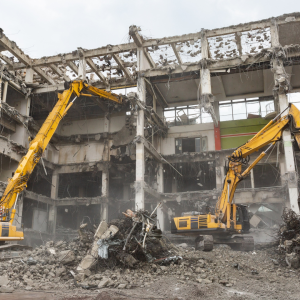
 Most engineering stories focus on beginnings. A new building breaks ground, a roadway opens, a development takes shape or an old property is transformed into something new.
But before some projects can begin, something else has to come down.
Demolition may look like the opposite of engineering, but safely removing a structure or clearing a developed site can require just as much planning as building one. Existing utilities need to be identified, structural systems must be understood, neighboring properties need protection and the site has to be prepared for whatever comes next.
At McNeil Engineering, that process is another reminder that successful projects are often shaped by the work that happens before anyone begins constructing the final design.
Demolition Is Not Just Destruction
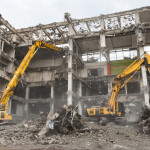
Watching heavy equipment tear into an old building can make demolition look straightforward. In reality, responsible demolition is a carefully sequenced process.
Structures carry loads in specific ways, and removing one component can change how forces move through everything that remains. Walls, beams, columns, floors and foundations may all interact, which means the order of removal can matter.
The goal is not simply to make a building disappear. It is to remove it safely while controlling the effects on workers, neighboring structures, utilities and the surrounding property.
Existing Drawings Are Only the Beginning
One of the first challenges with older structures is understanding what is actually there.
Original plans may exist, but buildings often change throughout their lives. Additions are constructed, interior walls move, mechanical systems are replaced and repairs may introduce materials or details that never appeared on the original drawings.
Field investigation helps confirm existing conditions before major decisions are made. Surveying, structural observation and available records can work together to build a more accurate picture of the property.
That information becomes especially important when only part of a structure is being removed and another portion will remain.
Partial Demolition Changes the Puzzle
Removing an entire freestanding building is one thing. Removing a portion of a building while preserving the rest can be considerably more complicated.
Imagine an older facility with several additions constructed at different times. A property owner may want to remove one wing while renovating another, but the two areas may share structural elements, utilities, foundations or drainage systems.
Engineers can help identify where those connections exist and determine what modifications may be needed before demolition begins. Temporary support, new structural framing or revised utility connections may all become part of the project.
The challenge is similar to remodeling a house while people are still living in it, only on a much larger scale.
Utilities Do Not Disappear With the Building
A structure may be scheduled for removal, but the infrastructure serving it can extend far beyond its walls.
Water, sanitary sewer, storm drainage, electrical service, natural gas and communication lines may all cross the property or connect with systems serving adjacent buildings. Simply cutting them off without understanding those relationships can create significant problems.
Civil engineering and surveying help identify how those systems move through the site. Some utilities may need to be abandoned properly, while others may need to be relocated or preserved for future development.
This is also where planning ahead creates value. If the property will be redeveloped, certain utility connections may be useful to the next project rather than removed entirely.
What Is Underground Can Matter as Much as What Is Above It
Demolition does not always stop at ground level.
Foundations, abandoned utility lines, underground tanks, old pavement sections and other buried improvements may remain after a building is removed. Whether those elements can stay depends on the future use of the site and the conditions surrounding them.
A foundation that does not interfere with one redevelopment concept could become a major obstacle for another. Accurate information about underground conditions allows the next design team to make decisions based on what actually exists rather than discovering it during excavation.
Sometimes the most important part of preparing a property for the future is understanding what previous development left behind.
The Neighboring Property Still Matters
Buildings rarely exist in isolation, particularly in established urban areas.
Demolition may occur only a few feet from another structure, public sidewalk, roadway or utility corridor. Equipment access, vibration, dust, debris control and temporary conditions all need to be considered in relation to the surrounding environment.
Dense development can make these projects particularly challenging because there may be very little room to work. Staging equipment, removing materials and maintaining access can become engineering and logistical problems of their own.
A successful demolition project protects not only the site being changed but also the people and properties around it.
The Land Still Needs to Drain
Removing a building changes how water behaves on a property.
A roof that once collected runoff may disappear, while areas of exposed soil may temporarily replace pavement and concrete. Drainage patterns can shift, and temporary site conditions may create erosion risks that did not previously exist.
Civil engineers can help plan how stormwater will be managed during the transition. Temporary grading, erosion control and drainage strategies may be necessary until permanent improvements are constructed.
Water does not care that the property is between projects. The site still needs to function while it changes.
Sometimes the Best Material Is the One Already There
Demolition also creates an opportunity to think about materials differently.
Structural steel, masonry, timber, fixtures and other building components may sometimes be salvaged, recycled or reused rather than sent directly to a landfill. The feasibility depends on the project, materials and condition, but the conversation is becoming increasingly relevant as owners look for ways to reduce waste.
This does not mean every old component should be saved. It means teams can consider whether useful materials still have value before automatically treating everything as debris.
A project’s next chapter does not always require forgetting everything from the one before it.
Site Restoration Sets Up What Comes Next
Once demolition is complete, the property has to transition into its next condition.
That may mean preparing immediately for new construction, creating temporary parking, restoring landscape areas or stabilizing the property until future plans are finalized. Grading, drainage, soil conditions and remaining infrastructure all influence what needs to happen.
This phase can be easy to overlook because the exciting part is usually the new development that follows. Yet properly preparing the site can make the next project easier to design and construct.
A clean slate still needs to be engineered.
Good Information Makes Redevelopment Easier
One of the greatest benefits of careful demolition planning is the information it provides for the next project.
Updated surveys, documented utility locations, known foundation conditions and clear records of what was removed give future teams a stronger starting point. Instead of rediscovering the site from scratch, designers can begin with a more accurate understanding of existing conditions.
That knowledge can reduce uncertainty and help identify redevelopment opportunities earlier.
The end of one project can become valuable preparation for the beginning of another.
Engineering Is About Change
The built environment is never truly finished.
Buildings age. Businesses move. Communities grow. Properties change ownership, and land that once served one purpose eventually needs to serve another.
Engineering helps manage those transitions.
At McNeil Engineering, our work is often associated with what gets built, but successful development also depends on understanding what already exists and what needs to change before construction begins.
Sometimes progress starts with a new foundation, roadway or structure.
Other times, it starts by carefully making room for what comes next.