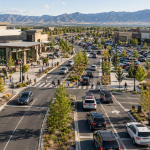




 At 10:30 on a Tuesday morning, a parking lot can feel almost empty. Traffic moves easily, sidewalks are quiet, and every part of the property seems to have more capacity than it needs.
Then 5:00 arrives.
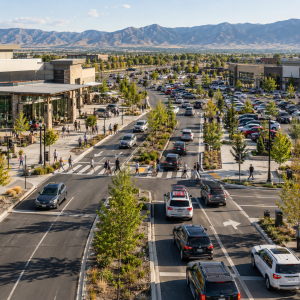
Cars enter from multiple directions. Delivery vehicles are trying to leave. Pedestrians cross drive aisles. Someone is waiting to turn left against traffic, another driver is looking for a parking space, and a service vehicle needs access to the back of the property.
The site has not changed. The demand placed on it has.
At McNeil Engineering, moments like these illustrate an important idea in civil engineering and site design. Successful projects cannot be planned only around average conditions. They also need to function when everything gets busy at once.
The Average Day Does Not Tell the Whole Story
Designing around averages can be misleading because people rarely use places at a perfectly consistent rate. Schools have morning drop-off and afternoon pickup. Restaurants experience dinner rushes, offices have arrival and departure periods, and retail centers can see major swings in traffic throughout the day.
Churches, recreational facilities, medical offices, entertainment venues, and mixed-use developments can face even more concentrated periods of activity. For short stretches of time, infrastructure that normally feels comfortable may suddenly be asked to do much more.
Engineers need to understand those peak moments because they often reveal the true performance of a site. A roadway that works well most of the day can still create a daily bottleneck if its busiest 20 minutes were not carefully considered.
Traffic Flow Is Really About Decisions
Traffic problems are not always caused by too many vehicles. Sometimes they happen because too many drivers are being asked to make difficult decisions in the same place.
Should I turn here? Is that the entrance? Can I cross this lane? Where does the pickup line begin? Is someone backing out of that space?
Good site circulation reduces unnecessary decision points. Entrances, internal roadways, parking aisles, signage, medians, and turn movements should work together so that drivers can understand the site without constantly stopping to figure it out.
The goal is not simply moving cars faster. It is creating predictable movement that reduces conflict between vehicles, pedestrians, deliveries, and other site users.
The First 30 Seconds Matter
Think about entering an unfamiliar property. Within seconds, you are looking for clues about where to go.
A well-designed site communicates those directions almost instinctively. The roadway geometry, landscaping, building orientation, parking arrangement, and pedestrian paths help guide movement before a driver ever reads a sign.
When those elements compete, confusion increases. Drivers slow unexpectedly, change direction, or enter areas that were not intended for general circulation.
Civil engineering and landscape architecture can work together to make arrival feel intuitive. That first impression isn’t simply aesthetic; it can directly affect how efficiently the site operates.
Drop-Off Zones Are Controlled Chaos
Few places demonstrate peak demand better than a school drop-off area.
For most of the day, the roadway may be almost completely quiet. Then, within a narrow window, dozens or even hundreds of vehicles can arrive while buses maneuver, students walk toward entrances, parents merge into queues, and staff members direct traffic.
Designing these environments requires thinking about movement in layers. Vehicle stacking, pedestrian crossings, bus circulation, visibility, ADA access, emergency routes, and surrounding streets all influence how the system performs.
A solution that works for ordinary traffic may not work when everyone arrives within 15 minutes. Peak demand changes the equation.
Pedestrians Create Another Layer of Movement
Eventually, nearly every driver becomes a pedestrian.
Once someone parks, the engineering challenge shifts from vehicle circulation to safely moving that person toward the building or destination. That may require crossing traffic lanes, navigating grade changes, moving through landscaped areas, or sharing space with vehicles searching for parking.
Pedestrian routes should feel obvious rather than improvised. Sidewalks, crosswalks, curb ramps, landscaped islands, and building entrances can work together to create clear paths through busy environments.
When pedestrian movement is considered early, it can also influence the parking layout itself. Instead of asking people to find their own route through moving traffic, the site can intentionally guide them toward safer paths.
Parking Capacity Is Only Part of the Question
A parking lot can have enough spaces on paper and still perform poorly.
The location of those spaces matters. So does the arrangement of aisles, the placement of accessible parking, the distance from entrances, and how quickly vehicles can move through the property when demand increases.
Turnover matters too. A medical office, restaurant, apartment development, and entertainment venue may each experience parking in completely different ways, even if they contain the same number of spaces.
Good design considers how parking will actually behave rather than treating each space as an identical rectangle on a plan.
Do Not Forget the Vehicles That Are Not Customers
Passenger cars are only one part of many sites.
Delivery trucks need loading access. Waste collection vehicles require room to maneuver. Fire apparatus may need clear emergency routes, and maintenance crews need practical ways to reach infrastructure without disrupting normal operations.
These larger vehicles often have very different turning requirements than passenger cars. If their movements are considered too late, they may end up blocking circulation, crossing curbs, or interfering with pedestrian areas.
Planning for these occasional users is important precisely because they are occasional. The site still needs to work when they arrive.
Landscape Architecture Can Help Organize the Rush
Landscape design can play a surprisingly important role in circulation.
Planting islands can define parking aisles. Trees can reinforce pedestrian routes, while changes in paving or landscape character can help identify entrances and gathering areas. Carefully positioned landscape features can visually organize a large site without making it feel dominated by pavement and traffic controls.
There is a balance, however. Vegetation must also preserve visibility where drivers and pedestrians intersect, and mature growth needs to be considered during design.
The strongest landscapes do more than decorate infrastructure. They help people understand and experience it.
The Best Test May Be the Worst 20 Minutes
A site can perform beautifully for 23 hours and still frustrate people every day during the one hour when demand peaks.
That is why engineers look beyond typical conditions. Peak periods expose bottlenecks, turning conflicts, inadequate stacking, difficult pedestrian crossings, and other issues that may remain invisible during quieter periods.
Designing around those moments does not mean overbuilding everything. It means identifying where temporary demand becomes important and creating enough flexibility for the site to absorb it.
Sometimes one additional turn lane, a better-positioned entrance, a longer queue, or a clearer pedestrian connection can change how the entire property performs.
Engineering for Real Life
People do not use buildings and infrastructure according to perfectly spaced schedules. They arrive in waves, change routines, take unexpected routes, make deliveries, pick up children, attend events, and occasionally all show up at exactly the same time.
Engineering has to account for that reality.
At McNeil Engineering, successful site design means looking beyond how a property appears on a plan and imagining how it will actually behave once people begin using it. That means considering quiet mornings, busy afternoons, routine deliveries, unexpected congestion, and the moments when every part of the site is being asked to work at once.
Because the true test of a well-designed site is not how it performs when almost no one is there.
It is what happens when everyone arrives.